When Russian troops invaded Ukraine in February, Iryna Stavchuk, thus numerous other Ukrainians, had her globe shook up.
At the time, she was the replacement minister of environmental protection and natural deposits and had actually been in the midst of functioning to aid the nation meet European requirements on concerns such as recycling and also garbage disposal. Yet when bombs began to fall on Kyiv, she quickly changed her emphasis to emergency situation wartime operations.
Russian pressures have since been eliminated of the funding and also the northern area of the nation, and also displaced individuals in some locations have begun to go back to their homes. Though global interest on the combating has waned, the fights have surged on in the industrial south and also east and also the environmental damage functioned by the war continues to place.
Prior to the war, Ukraine was a country starting to make progress on ecological concerns, Stavchuk states. It was improving the pollution-emitting factories that had actually made it a commercial facility throughout the Soviet age. Yet those exact same markets have actually made the country extra at risk to ecological damage under Russian attack.At site https://www.ecomena.org/environmental-problems-ukraine-is-facing/ from Our Articles Scientific American talked to Stavchuk, who left the ministry in May, concerning a few of the significant issues she as well as others have concerning the battle’& rsquo; s environmental toll. In regards to environmental threats, what has frightened you the most given that the invasion started?
Among the biggest total risks is that of nuclear crashes, and it has actually been really terrifying to observe the tasks that were occurring in Chernobyl as well as at the Zaporizhzhia nuclear reactor. The Russian army blocked electrical energy in Chernobyl, which regulated the radioactive-waste storage facility, and also the entire [containment zone] additionally has its own tracking system, which needs electricity.
In Zaporizhzhia, there was a fire in an administrative structure. The Russians were eliminating the firefighters that were attempting to stop the fire. They were making use of eruptive weapons on the region of the nuclear reactor, as well as those activities are very dangerous on contaminated sites.
Likewise, Ukraine is an industrial nation, so we have a great deal of industrial plants, huge ones—– chemicals, steel and others—– which, when it comes to army attack, can develop significant neighborhood pollution.
And also we have problems—– which day from 2014, from the battle in Donbas [the region in eastern Ukraine where Russia has actually sustained separatist boxers]– pertaining to attacks on the coal mines. There is an inability of coal mines to drain water, which brings about contamination of the underground water however likewise of the surface water. This water, which is highly contaminated with different heavy metals and also numerous other toxic substances, is released as well as it after that enters into rivers.
The Zaporizhzhia nuclear reactor is under the control of the Russian army. There are reps from the Russian nuclear power company Rosatom. The Ukrainian personnel continues operating at the plant however under the control and also management of these Russian agents of Rosatom. So basically, Rosatom exists to collaborate job, and we don’& rsquo; t have much information on that particular. Concerning the Chernobyl exclusion zone, when Russian soldiers left, Ukraine took control of the territory, and also they are currently trying to estimate all the effects. The system for the monitoring of radioactive contamination in the exclusion zone was damaged, and there were likewise harms to other systems. They’& rsquo; re currently gathering all these truths to plan for just how much cash as well as resources are needed to restore.
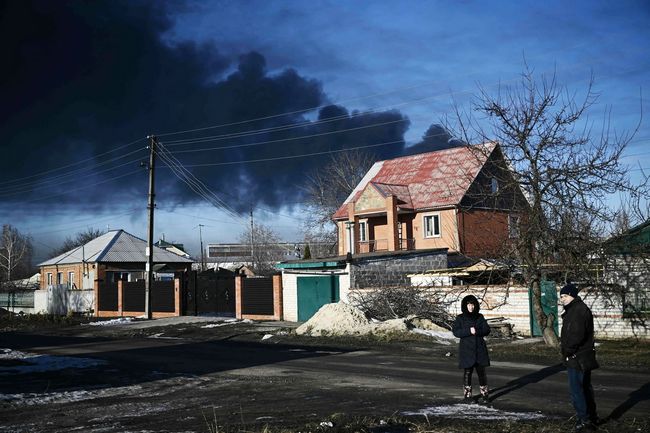
I would certainly claim commercial disasters. There was one on April 9 in Luhansk [in the Donbas region] It was a storage tank with 4 tons of nitric acid that was ruined. As well as naturally, there have been attacks on the oil depots. That also has substantial environmental impacts, specifically on air contamination.
In regards to land air pollution, we had 2 situations with fowl farms. When there is no electrical power, it stops operation, as well as these hens, they die very promptly. We don’& rsquo; t understand just how much [of the carcasses and other organic matter] was put into the fields. There’& rsquo; s the danger of microbial contamination in groundwater.
Drinking water in Ukraine is just one of the targets of the inhabitants, specifically in the eastern and also southern. Russian troops are polluting fresh water by shelling plants and also storehouses near water bodies, which can bring about leakages of harmful materials. They have actually likewise destroyed water-treatment facilities. As a result of the hostilities, water infrastructure—– consisting of sewage-treatment facilities—– are ruined in nearly all the cities of the Donetsk as well as Luhansk areas in the areas managed by Ukraine [as of April]
In the south, the water from the Dnipro River to the city of Mykolaiv has actually been harmed. For over a month, the locals of Mykolaiv sanctuary’& rsquo; t had [regular] accessibility to tidy water. [Since mid-April], data from UNICEF state 1.4 million individuals in Ukraine have no accessibility to secure water, and 4.6 million have only restricted gain access to.
All these actions are creating irreparable damages to aquatic environments and also influence human wellness. This will certainly be a growing concern as people begin to go back to their homes. There is a concern that the destruction of the water system in places such as Mariupol’ & rsquo; could bring about the spread of infectious illness, also cholera.
Certainly, we want that. It’& rsquo; s also been specified by our president that there’& rsquo; s a certain chance for Ukraine to reconstruct its cities as well as markets with new green technologies and also techniques that integrate energy efficiency and great planning for fewer emissions of greenhouse gases as well as likewise much less air pollution of the air. Great planning on its own in fact adds to far better environmental results.